UpChansa · Blog
How to Run a Sale for Your School, Club or Group
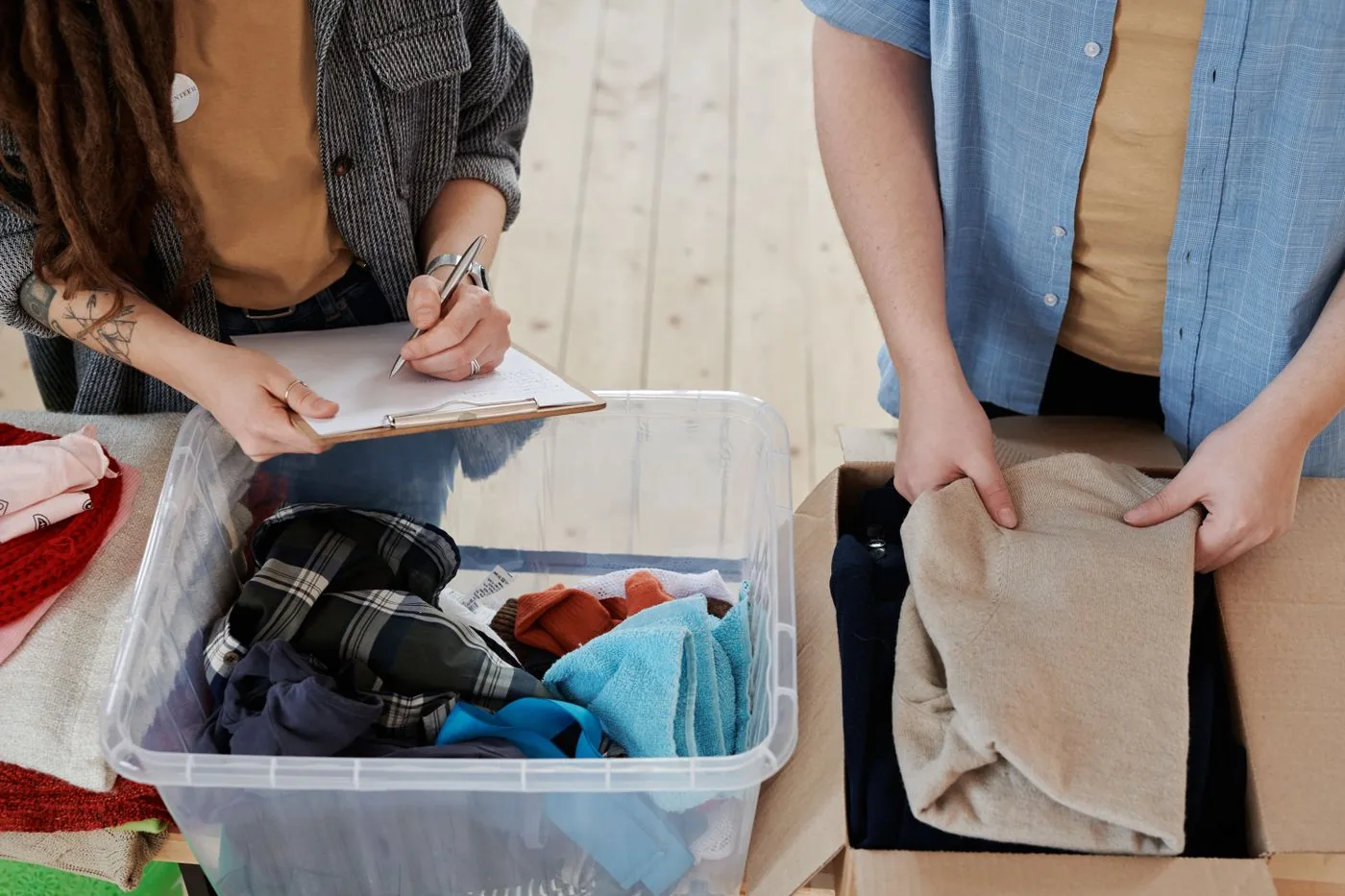
Every school, club and building has someone who ends up saying "I'll take care of it". A clothing sale for families. A gear swap before the season. An auction to pay for the tournament. A garage sale down the street.
The names change, but the job doesn't: gather the items, let people know, show what's there before the day, then deal with the leftovers. This guide gives you the method that works for everyone, then the specifics for each kind of group. In Ottawa-Gatineau, that often means running it in two languages, for people on both sides of the river.
Timing is on your side. In an Angus Reid and DIG360 survey (May 2025), 77% of Canadians said they had bought at least one pre-owned item in the past year. And nearly one in five Canadian parents planned to buy back-to-school items second-hand (NerdWallet Canada and Harris Poll, July 2025). Buying used is no longer something people apologise for.
The method, whatever your group
1. Pick a format
First decide how items will change hands:
- Donations and low prices. Members donate, the committee sells cheaply, the money goes to a project. The simplest.
- Swap. Everyone brings something and leaves with something else. No money.
- Free for all. Give what you have, take what you need.
- Auction. For the few pieces that are actually worth something.
You don't have to pick just one. Plenty of groups run low prices on the tables and an auction for three or four big items.
2. Get the green light
Every group has someone to check with: the principal and school or parent council, your club or nonprofit's board, the building manager or condo board, or the city for anything on the street. Ask what applies to you, especially around the space, permits and handling money. Rules differ between Ontario and Quebec, and from one board or city to the next.
Two rules hold everywhere: taking part is voluntary, and when kids are involved, you talk to parents, never directly to the children.
3. Choose the date and place
Best trick: attach your sale to a moment when people are already there. Parent-teacher night, club registration, a home game, the building's annual meeting. You don't have to convince anyone to make a second trip.
4. Collect, sort, price
Announce the collection two or three weeks ahead, with one clear drop-off spot. Sort by category and size. Turn away anything dirty, broken or incomplete. Then set three or four round prices and post them in big letters: it heads off half the questions at the cash table.
5. Put it all online with an UpChansa group
This is where most committees run out of steam: photos scattered in a group chat, endless "is this still available?", lists copied by hand. An UpChansa group handles it, free and with no commission.
Create the group. Pick its type: School, Daycare, Club, Organisation, Residence, Neighbourhood, Family or Other. A group can be public, private or "Members first" (members see new items for 1 to 14 days, then everyone does). School and Daycare groups are private by default, and their page never shows up on Google. A Family group is always private.
Invite your members. Share the invite link, or print the A4 poster with its QR code: on the school bulletin board, in the arena lobby, by the mailboxes. Let people in directly, or ask up to three questions before approving them (for example, "Which team does your child play on?" or "Which unit do you live in?").

The printable poster: the date in large type, and the QR code leads to the group.
Set up the Sale day. A card shows the date, time, place, how to pay and where to drop donations. It appears on the group page, on the invite page and on the poster. Members tap "Add to my calendar" so they don't forget, and "Directions" if you added an address.
Post everything at once. With "Post several items", pick up to 20 photos. Each photo becomes a draft. Tap a price ($0.25, $0.50, $1, $2, Free or Other price), add the size if it matters, then publish them all together.
Post on behalf of the group. A group admin can post as the group, and the listing then shows "Offered by" with the group's name ("Given by" for a free item). Everyone knows it's the club or committee selling, not one particular person. The same listing can also sit in several groups.
Stay in control. Admins can review posts before they appear, remove items and manage members.
One important point: money never goes through UpChansa. People pay at the table, cash or debit, or settle between themselves. UpChansa is for showing the items and bringing people together.
6. Sale day
Bring a float of change, put two volunteers on the cash table, and use one-hour shifts, which are easier to fill. Put up a big sign saying the sale is open to everyone. Without one, passers-by aren't sure they can come in, and some parents mistake the clothing table for the lost and found.
7. Leftovers: "I want it"
There's always something left. Instead of bagging it up, post the leftovers as Free in the group. Members tap "I want it" to join a queue. You pick the rule: first come, first served, or let it simmer for 24 hours, then choose someone from the queue or draw at random. Once the item is picked up, "Mark as given" closes the queue. The Give an item away guide walks through it.
Schools and daycares: the kids' clothing sale
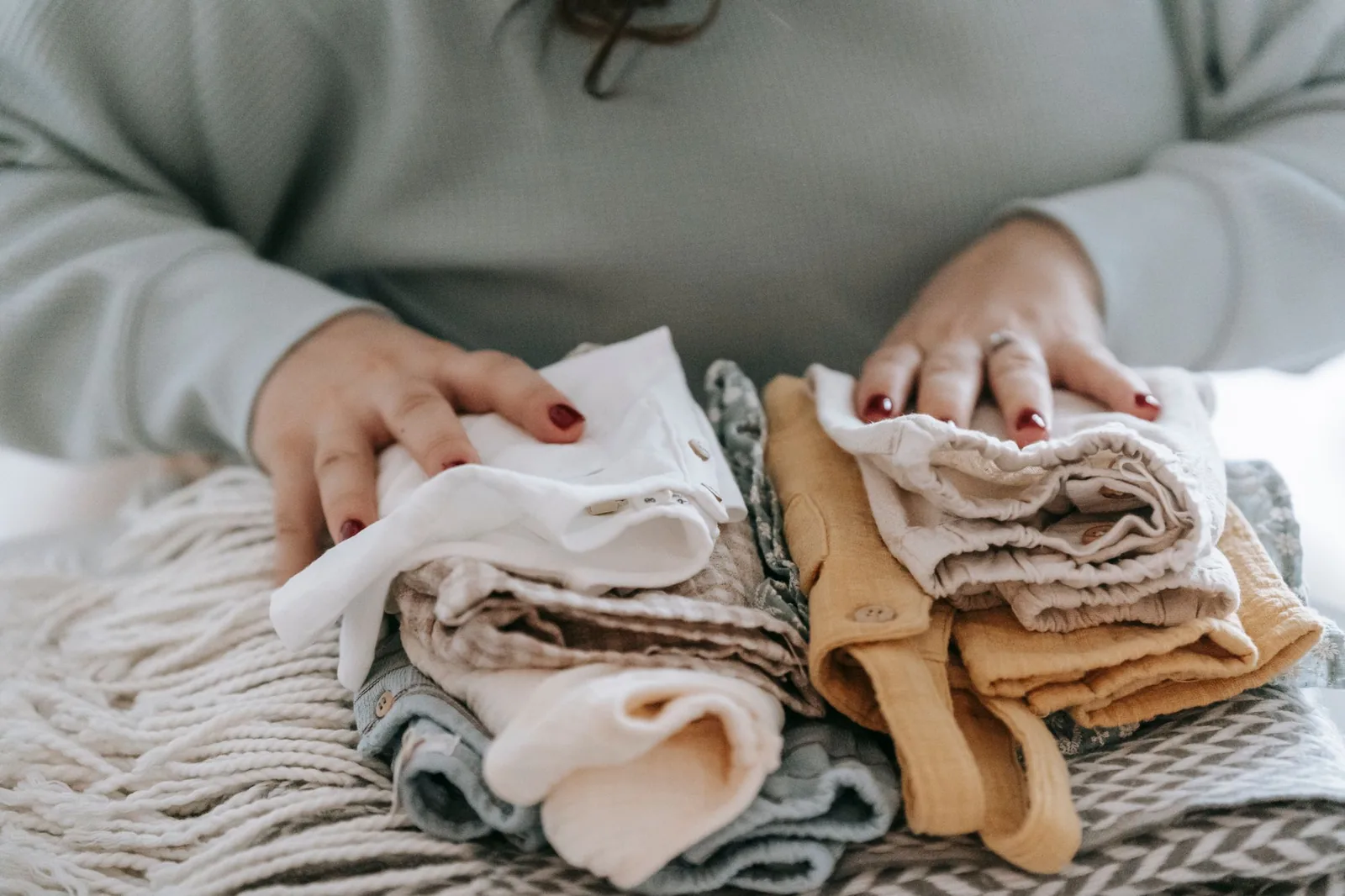
Kids outgrow clothes long before they wear out. A clothing sale passes them to the next family instead of the bin. One bin per size group (0-2, 3-5, 6-8, 9-12, teens), boots tied in pairs, round prices: $0.25 for socks, $1 for a sweater, $2 for a coat. In the fall, lead with winter: snowsuits, boots, mittens, toques.
The group stays private: only invited parents see the items. If you want to open the leftovers to the neighbourhood, "Members first" makes them public after the delay you choose. For toy and costume swaps, see our post on swapping toys and costumes.
Sports clubs: the equipment swap
A growing kid needs new skates almost every season. A gear swap before registration moves skates, shin pads, hockey bags, cleats and skis between the club's families. Parents save, and what the club sells in its own name helps fund the team.
Sort by sport, then by size. Set your rules ahead of time: many leagues and clubs won't take used helmets or mouth guards, for example. Ask your league or association what it requires. Post each piece with its size: a parent is hunting for a size, not just "skates".
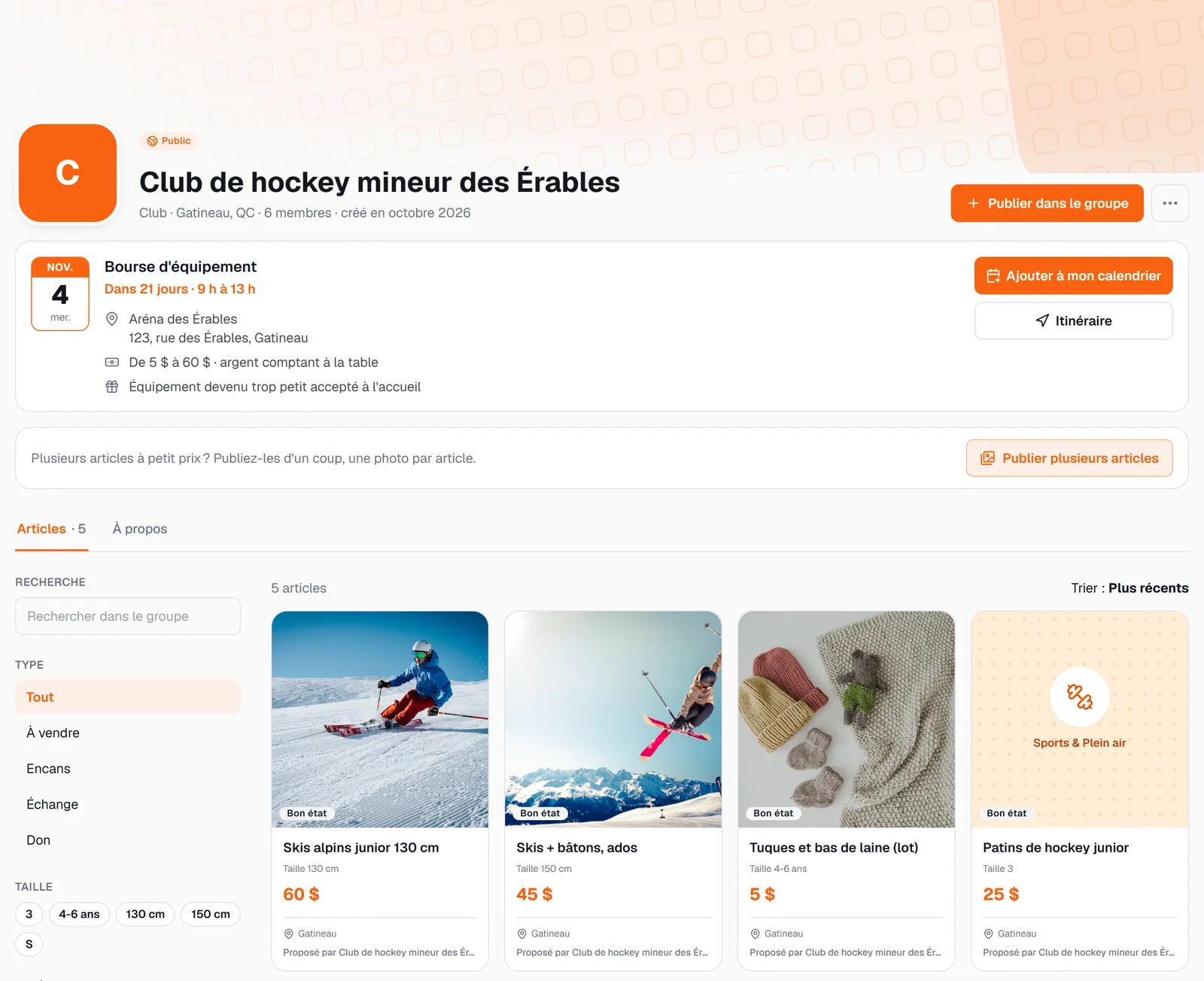
A sports club: the Sale day card and gear offered in the club's name.
Associations and nonprofits: the fundraiser auction
Some items are worth more than a table price: a nearly new bike, a piece donated by a local artist, a gift basket from a neighbourhood shop. Post them as a fundraiser auction in the group's name; they carry a "Fundraiser" badge. Members bid, and the final amount goes to your cause. Payment happens directly with your organisation, like everything else.
Put the auction's end date on the Sale day card and hand over the items that day. If you're a registered charity, check the rules on tax receipts before promising anything to donors.
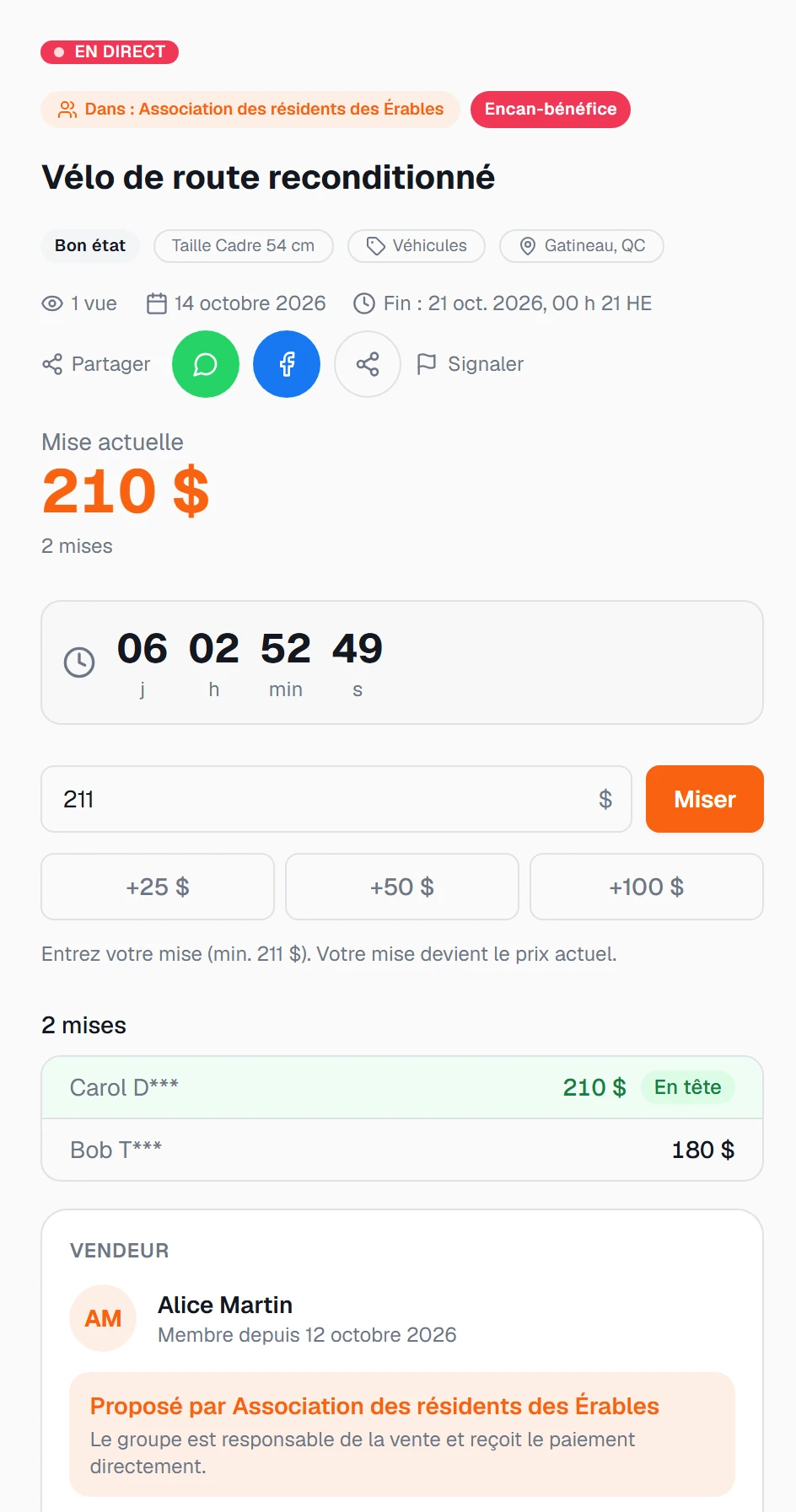
A fundraiser auction posted in an association's name.
Residences, buildings and neighbourhoods: the shared garage sale
A garage sale across twenty doors draws far more people than one on its own. Create a Residence or Neighbourhood group, pick a shared date, and get every neighbour involved: each person posts their own items in the group, and the Sale day card gives the time and meeting point.

A neighbourhood garage sale, announced in the group.
Before you set the date, check with your city whether a permit or set hours apply, and with building management about common areas. The rest of the year, the group handles swaps between neighbours: the stroller nobody uses anymore, the ladder you lend out, the plants you divide in spring.
Families: passing things along
Cousins handing down snowsuits, a grandmother checking which size to buy, the crib that makes the rounds: a Family group is always private, and it's built for exactly that. Post items as Free and let the "I want it" queue settle who gets what, no hard feelings.
Common questions
What does it cost? Nothing. Creating a group and posting items on UpChansa is free, with no commission.
Do we need a permit? It depends on where you are and what kind of sale it is. Ask your school, league or city before you set the date.
Can one item be in several groups? Yes. A pair of skates can sit in both your club's group and your neighbourhood's.
Who sees the items in a private group? Only members. Strangers and search engines see nothing.
Start your group's sale
Creating a group for your school, your club or your association takes a few minutes and costs nothing. The Create and run a group guide takes you through it step by step. Live nearby? See what's happening in Ottawa-Gatineau.
Sources: Angus Reid and DIG360, May 2025, via Retail Insider; NerdWallet Canada and Harris Poll, July 2025, via NerdWallet.